
Our mission is to nurture each child’s social, physical, and early learning development through age-appropriate experiences while sharing God’s love in a caring Christian environment.
The overall goals of our program are to:
-Provide time for interaction among children to practice emotional regulation, self-control, communication, cooperation, and other social skills.
-Provide experiences designed to develop motor skills involving both large and small muscles.
-Provide informal opportunities to develop basic pre-learning skills in math, reading, writing, science, social studies, music, and art.
-Provide opportunities to succeed at tasks suitable for the individual developmental levels.
-Provide opportunities to hear about God in an environment of Christian love.
Mission
Play-based education is an approach to early childhood learning that emphasizes the importance of play as a primary method for young children to explore, understand, and engage with the world around them. It recognizes that children learn best when they are actively involved in meaningful, hands-on experiences. Through play, children develop cognitive, physical, social, and emotional skills in a natural and engaging way, building a foundation for lifelong learning and curiosity.
One core principle of play-based education is that play should be child-directed and open-ended. This means children choose the activities they engage in and direct how the play unfolds, allowing for creativity, problem-solving, and exploration. Educators act as facilitators rather than instructors, offering materials, guidance, and support to extend and deepen children’s learning based on their interests and developmental stages.
A key practice within play-based education is the use of invitations to play. These are carefully arranged setups or “provocations” designed to spark a child’s interest and curiosity. Invitations to play are not prescriptive but offer open-ended materials and themes that encourage exploration and creativity. For example, setting out seashells, sand, and small figurines might invite children into sensory play and storytelling. These intentional arrangements foster independent thinking and support children’s natural drive to investigate and create.
Another essential concept is the inclusion of loose parts—open-ended materials that can be moved, combined, taken apart, and reassembled in countless ways. Loose parts might include items like buttons, sticks, fabric scraps, or recycled objects. They encourage children to use imagination, develop fine motor skills, and engage in complex play scenarios. Because loose parts have no predefined purpose, they empower children to assign their own meaning, promoting innovation and problem-solving across all areas of development.
Finally, a supportive learning environment is crucial in play-based education. This includes both the physical setting—rich with materials and opportunities for exploration—and the emotional climate, which values each child’s voice, effort, and imagination. When children feel safe, respected, and free to express themselves, they are more likely to engage deeply in play and experience meaningful, self-driven learning.
Philosophy
“This school exceeded our expectations in every way. When our daughter joined the three-year-old and four-year-old classrooms, we knew we had made the right choice. The director and teachers were warm and welcoming, immediately putting us at ease. The half-day, play-based program aligned perfectly with our values and our daughter thrived under the care of her teachers, with whom she still maintains a strong connection. We feel incredibly fortunate to have had such a positive experience!”
- The Minsker Family
Testimonials
“We LOVED our time at FFUMC! Our son was always excited to go and even sad on days off. Their play-based approach is so wonderful and all of the staff were fantastic and so loving and kind. They were excellent about communication and keeping children safe and well nurtured. They also created so many wonderful events for us to connect with other parents, staff, and the community. We are so grateful for the time our son spent there and would highly recommend them to anyone.”
- The Ainu’u Family
“It was a beautiful experience, the environment was safe, warm and everyone was treated like family. The teachers were absolutely attentive, kind and caring. My child was always excited to attend school and cried when she had to leave her teachers. I really miss the car line and the pleasantries we shared in the mornings and afternoons. Love love love our time there.”
- The Holness Family
“My daughter started here as a 1 year old and is now in the 3's room. As a stay at home mom I was looking for a happy medium where she could grow socially, we could afford childcare, and I didn't have to be away from her for 8hrs or more. We toured Fayetteville First [UMC] Preschool 3 times and each time I felt peace. We have loved our experience so far, the teachers and leadership really have hearts for children and make it easy to be an involved parent, and I love how my daughter has grown and loves going to preschool. This preschool will always hold a special place in my heart and we look forward to sending all of our children here.”
- The Beemon Family
Fayetteville First UMC Preschool first opened its doors in 1987 with Jean Jones serving as our first Preschool Director. Operating first as a mother’s day out program, as the years went on, we’ve renewed our commitment to offer quality early childhood education as a part-time preschool program.
At Fayetteville First UMC Preschool, we help children reach their full potential by building positive relationships with our students, families, and community. We embrace the play-based philosophy, honoring the principle that play is the work of childhood. By using our knowledge of child development, we provide learning through play experiences that keep the children engaged and excited for more.
Our teachers cultivate environments and create activities that encourage children to develop motor skills and language skills, practice problem solving, and promote positive social interactions. Research has shown that the mastery of these skills is a strong indicator of future academic success. We believe that children learn best when they are invested in the task at hand. By working pre-academic skills into everyday play, we ensure our students are gaining the skills necessary for success in kindergarten, interacting with their peers, and beyond!
Our philosophy is grounded in Christian beliefs, and we seek to demonstrate Christ’s constant love so our children will feel safe, secure, and respected every day. While faith is at the heart of everything we do, we welcome students of all backgrounds, faiths, and denominations.
About Us
Meet Our Team
Abby Lorence
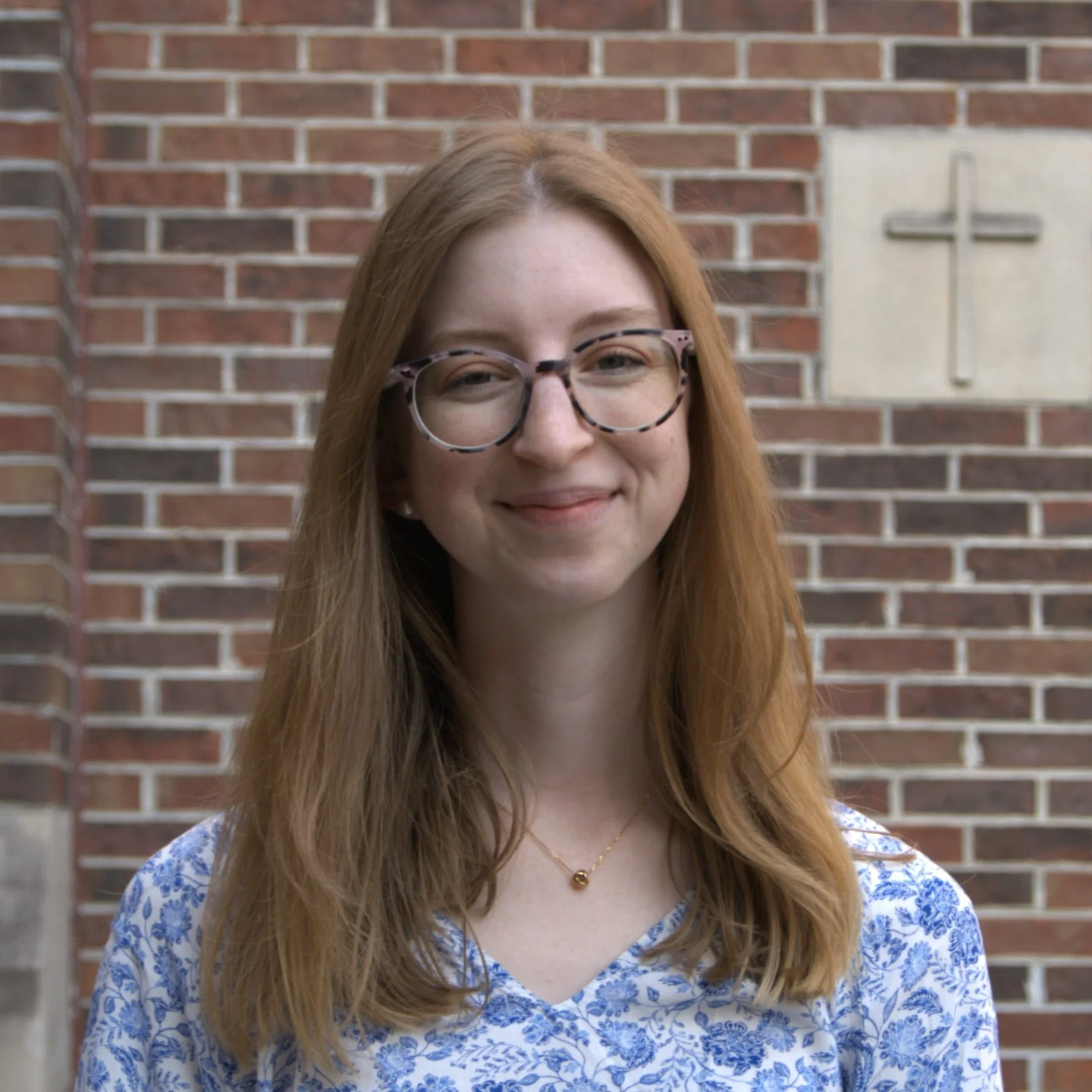
Abby Lorence has been a part of the Fayetteville First UMC Preschool team since 2023, serving first as a music teacher, then assistant director, and, more recently, as the director. Abby found her mission in faith and play-based preschools at The Preschool at Peachtree Road United Methodist Church after graduating from Faulkner University with her Bachelor of Arts in Choral Music. Abby Lorence remains dedicated to cultivating supportive educational environments where every child is empowered to become capable, creative, curious, and compassionate.
Preschool Director

Alexys Oliver
Alexys Oliver is the Assistant Director of the Fayetteville First UMC Preschool. Her degree is in Early Childhood Education, and she brings her professional background in event planning to this role. Alexys is passionate about ensuring kids know they are loved, both by the preschool staff and by God. Her faith and calling to care for children are instrumental to her work. Alexys grew up in nearby Riverdale and has lived in Fayetteville for most of her adult life, where she now resides with her husband and three young children.
Preschool Assistant Director